
Good animal welfare starts with calm animals. It also starts with systems that make calm the default. At Fresh Valley Farms, we design our grazing, infrastructure, and daily routines to reduce stress and let animals behave like animals.
Low-stress handling is not about doing less. It is about doing things differently. When animals feel safe, they move better, stay healthier, and perform better over time. The effectiveness of the humane approach is well established in livestock science and practical ranching experience.

What low-stress handling means
Low-stress handling focuses on how animals think and move. Livestock respond to pressure, space, body position, and timing. Calm handling works with those instincts instead of fighting them.
We avoid yelling, chasing, and crowding. We move animals in small groups. We give them time to see where they are going. We let them flow forward instead of forcing them.
This approach reduces fear responses. It also reduces slips, injuries, and wear on both animals and people.

Pasture-based living reduces stress
Our animals live outdoors on pasture. They are not confined to crowded barns or dirt feedlots. Space matters for welfare. So does protection from predators (especially for our poultry).
On pasture, animals can walk, graze, rest, and socialize naturally. Fresh air and movement reduce respiratory issues and lameness. Natural light supports normal daily rhythms.
Rotational grazing also helps. Animals move frequently but calmly to fresh ground. Moves become routine. Routine builds trust.

Handling through grazing systems
Most of our animal movement happens as part of grazing management, not “handling events.”
Portable fencing lets us guide animals without physical force. Gates and fence lines create clear paths. Animals learn the system quickly.
Because animals move often, no single move is a big event. That lowers stress compared to infrequent, high-pressure handling.

Infrastructure designed for calm movement
Facilities matter. Poor design creates pressure points. Good design removes them.
We use wide lanes, clear sight lines, and gentle turns. Animals can see where they are going. Shadows and sharp corners are avoided.
Electric fencing is used as a visual and psychological boundary, not a physical barrier. Animals respect it without repeated testing. That keeps movement quiet and predictable.

Health benefits of low-stress systems
Stress affects immune function. Calm animals stay healthier.
Lower stress supports better weight gain, improved feed efficiency, and fewer illness events. It also supports reproductive performance.
Reduced stress also lowers the need for interventions. That means fewer treatments and fewer disruptions to the herd.

Winter care and shelter
Cold weather is managed without indoor confinement. Animals have access to shelter, bedding areas, and space to move.
Dry footing and protection from wind matter more than warmth alone. Animals choose where to stand and rest based on conditions.
Stored forage is fed in ways that spread animals out and reduce competition. That keeps feeding calm and steady.

Poultry and pigs
Low-stress handling applies across species. Poultry are moved frequently to fresh ground using mobile housing. Moves are predictable and gentle. Birds are never rushed.
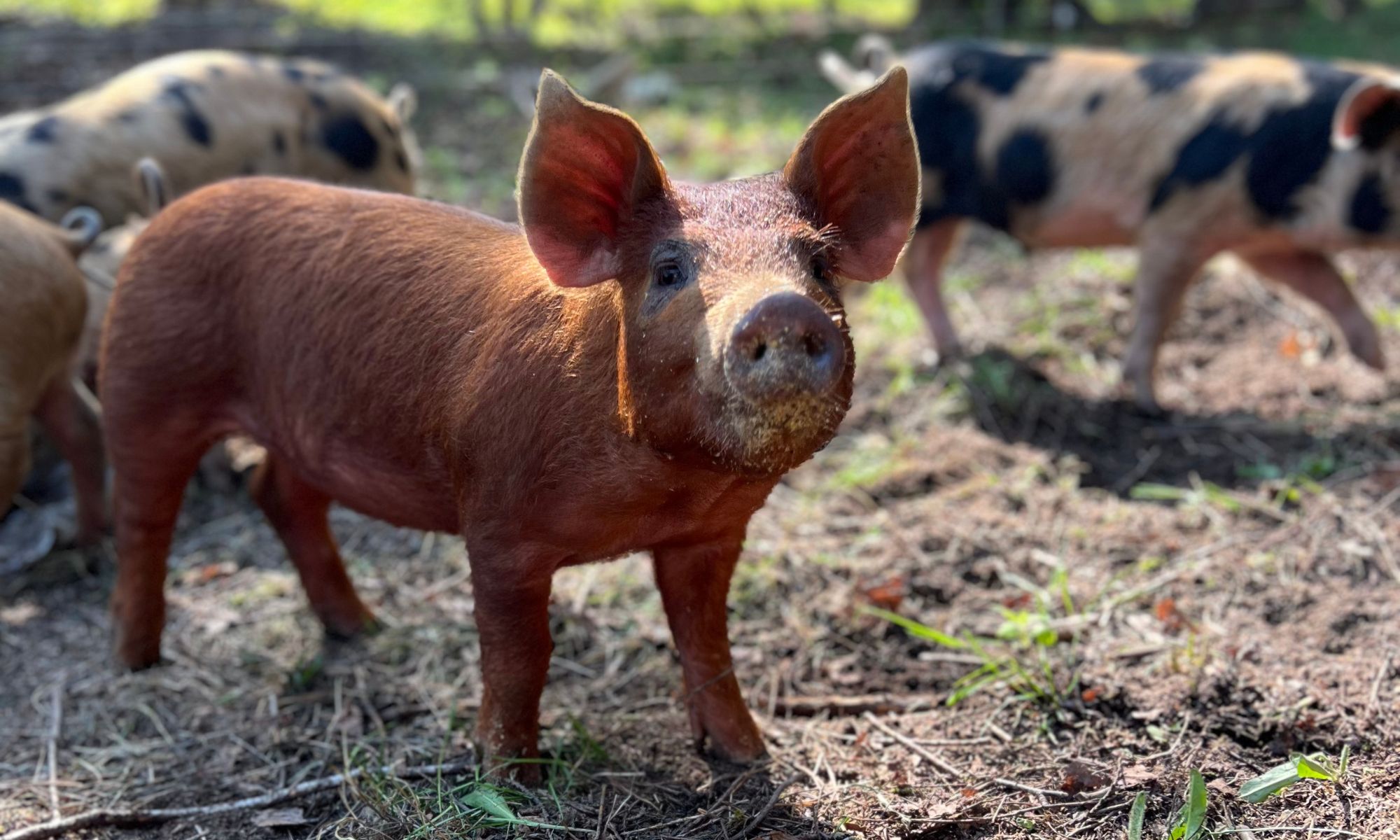
Pigs live in open pastures and wooded areas. Rooting, wallowing, and social behaviour are part of daily life. Handling focuses on calm movement using boards and space, not force. Our animals can exhibit natural behaviour, including foraging and playing.

Why this matters to food quality
Animal welfare and food quality are connected. Chronic stress affects meat quality through changes in muscle chemistry.
Calm handling supports better texture and consistency. It also reflects respect for the animals that feed our community.

Our commitment
We keep learning. We observe animals closely. If something causes repeated stress, we change it.
Humane-raised is not a label. It is a practice we use every day.