
Bill Gallagher (Alfred William Gallagher, 1911–1990) was a New Zealand inventor and farmer who helped make electric fencing practical for everyday farms. In the 1930s, he solved a simple problem with a safe electric pulse and then turned that idea into early fence energizers that made livestock control cheaper and more flexible than traditional fencing.
After World War II, he scaled manufacturing and kept improving his designs as electric fencing spread worldwide. His work helped shape modern animal management and grew into what became the Gallagher Group.
Who was Bill Gallagher?
Bill Gallagher was born in Hamilton, in New Zealand’s Waikato region, on May 17, 1911. He grew up on dairy farms and learned by fixing, building, and testing things in real farm conditions. He left school as a teen to work full-time on the family farm, and he kept inventing farm devices alongside his brothers.
Gallagher was not only an inventor. He was also a hands-on manufacturer, a salesman who listened closely to farmers, and a businessman who cared about quality control. Later in life, he was appointed a Member of the Order of the British Empire (MBE) in 1990.
The farm problem that sparked the electric fence
While working in a shed, a horse brushed against the family car. Gallagher connected a motorcycle magneto to a triggering device, electrified the car, and the horse got a shock. The idea worked, and it pointed to a bigger solution: animals could learn to respect a boundary without heavy, expensive fencing.
By about 1937, Gallagher built his first electric fence using mains power as a cheap, practical alternative to standard post-and-wire fencing. Because using mains supply was illegal at the time, he also developed battery-powered units that farmers could use safely and legally. By 1938, there was a proven local market for his prototypes.
Gallagher’s Practical electric fence
Electric fencing existed in different forms earlier in history, but Gallagher’s work helped make electric fencing practical for farms. He pushed the idea from a clever hack into a product farmers could buy, trust, and use daily.
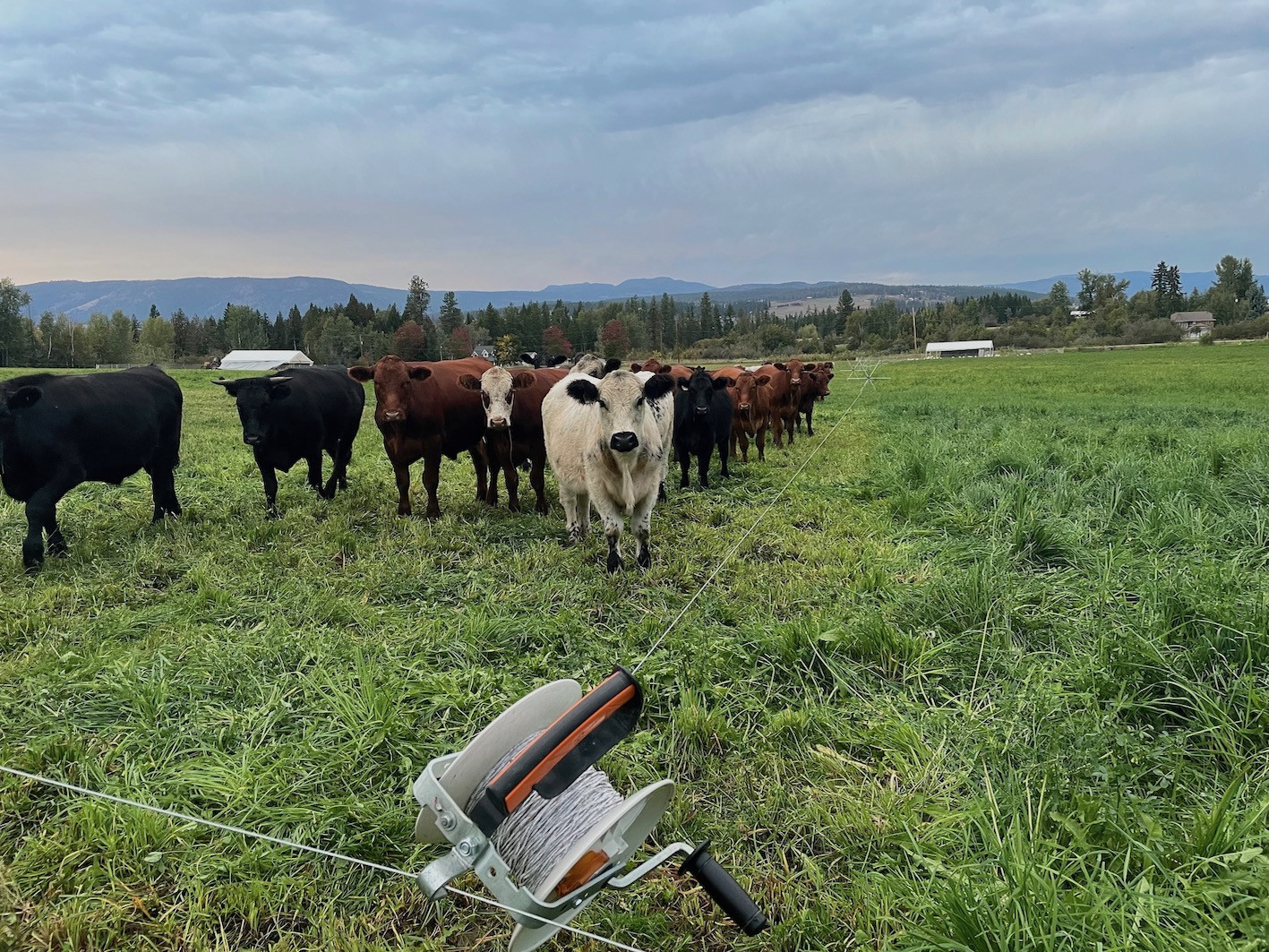
The basic value was huge. With an electric fence, farmers could control animals with fewer posts and less wire, build temporary lanes, protect sensitive areas, and adjust grazing patterns fast. Over time, this helped support rotational grazing, safer animal handling, and better land use on many types of farms.
From garage builds to a real factory
In the late 1930s and early 1940s, Gallagher shifted from prototypes to small-scale manufacturing. By 1940, the Gallagher family moved to Hamilton East, where Bill continued making electric fence units. He also worked on “gas producers” used to run vehicles during fuel shortages. During World War II, he was directed into war-related industrial work, including machinery repair and work connected to munitions production.
After the war, he expanded operations beyond a home garage into a workshop with employees. The business did a mix of repair work and manufacturing, but the battery-powered electric fence units stayed a consistent, popular product.
From garage builds to a real factory
In the late 1930s and early 1940s, Gallagher shifted from prototypes to small-scale manufacturing. By 1940, the Gallagher family moved to Hamilton East, where Bill continued making electric fence units. He also worked on “gas producers” used to run vehicles during fuel shortages. During World War II, he was directed into war-related industrial work, including machinery repair and work connected to munitions production. (Downs, 2000).
After the war, he expanded operations beyond a home garage into a workshop with employees. The business did a mix of repair work and manufacturing, but the battery-powered electric fence units stayed a consistent, popular product. (Downs, 2000).
Mains power and formal company growth
Two big shifts in the early 1960s helped electric fencing scale. First, mains-powered fence energizers became permitted in New Zealand in 1961, which made stronger, more consistent systems possible. Second, Gallagher Engineering was formally established as a limited liability company in 1963. (Downs, 2000).
By the late 1960s, Gallagher worked with electrician Jack Page to produce a mains-powered model (developed in 1969), and the company continued to grow its electronics capability. Over the 1960s, Gallagher’s sons (John and Bill junior) took larger roles in the business, including sales and product direction. (Downs, 2000).
Global exports and wide farm adoption
Gallagher was cautious about exporting at first. But after early export success in Australia in 1967, he and his wife Millie travelled and promoted electric fencing overseas, including in Britain. That export push helped turn a New Zealand farm invention into an international farm standard. (Downs, 2000).
By the early 1990s, Te Ara noted that Gallagher’s power fences were being used in over 100 countries, including unusual use cases such as elephant control in Malaysia and protecting Canadian beehives from bears. (Downs, 2000).
A quick timeline of key dates
1937: Built an early practical electric fence. He first tried it on mains power, but rules at the time limited that use. So he shifted to battery-powered fence energizers.
1938: Prototypes proved popular, and early sales showed strong local demand.
1961: New Zealand permitted mains-powered fence energizers, allowing stronger, more consistent systems.
1963: Gallagher Engineering became a limited liability company.
1967: Early export success in Australia helped start wider international growth.
1969: Built a new mains-powered model with electrician Jack Page.
1990: Bill Gallagher died on August 8, 1990, and was buried in Hamilton.
from electric fence to animal management systems
The business that began with electric fence energizers grew into what is now Gallagher Group and its animal management division. Gallagher’s own corporate history describes the company as family-owned and operating in over 100 countries. It also emphasizes ongoing investment in research and development as the company moved “from the electric fence to the cloud,” including connected hardware and software tools for farmers.
Leadership also became a multigenerational story. Bill’s son, Sir William (Bill Junior), played a major role in international growth, and public reporting in 2021 noted a transition to a new chief executive as Sir William moved into an ambassador-style role.
What Bill Gallagher Understood
Gallagher’s edge was not only the invention. It was the way he built around it. He tested ideas in real farm conditions, listened to farmers, sold directly, and focused on build quality. His long-term success is because of his responsiveness to farmers’ needs, frontline salesmanship, and quality control.
That mix matters for farm tools. They must work in bad weather, rough ground, and daily wear. Electric fencing is simple in concept, but it fails fast if parts, insulation, grounding, or power supply are weak. Gallagher’s career shows how strong field feedback and practical engineering can turn one clever idea into a durable product category.
Bill Gallagher did not invent electricity, wire, or the idea of a barrier. He did something more useful. He made electric fencing practical for farms, then built a manufacturing and sales engine that spread it worldwide. From a horse scratching on a car to fences used across continents, Gallagher’s work changed how people manage livestock and land.
References
Downs, J. (2000). Gallagher, Alfred William (1911–1990). Dictionary of New Zealand Biography, Te Ara: The Encyclopedia of New Zealand.
Fox, A. (2021, February 16). Sir William Gallagher to become Gallagher Group ambassador, ushers in new chief executive. The New Zealand Herald.
Gallagher Animal Management. About us.
Leave a Reply