
Good farms recognize each other. Fresh Valley Farms has long admired the work being done at Spray Creek Ranch, and while we operate independently, we consider them trusted friends in the wider regenerative farming community.
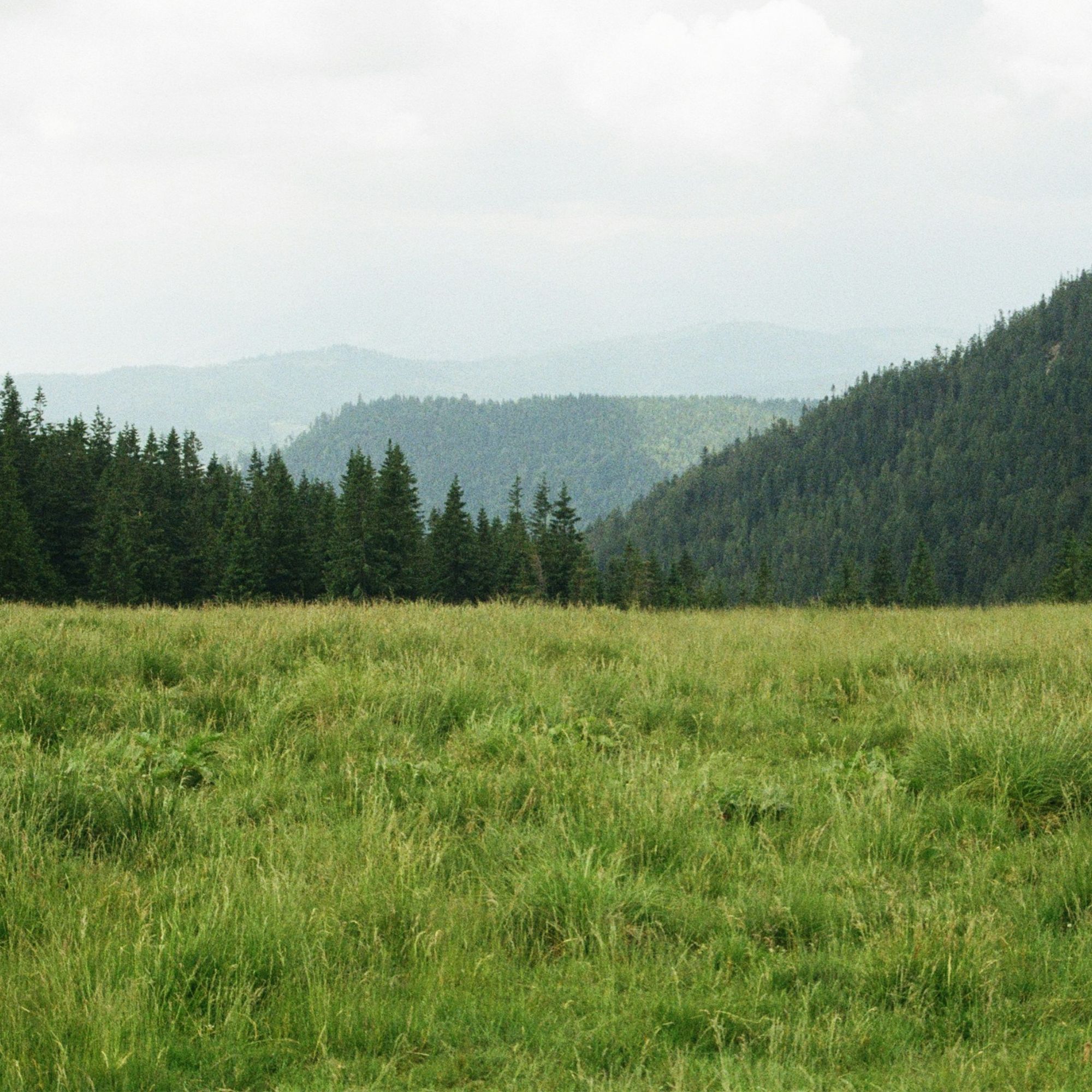
Spray Creek Ranch is a family-run, certified organic farm located near Lillooet, British Columbia. The ranch sits on 260 acres in the rain shadow of the Coast Mountains, bordered by the Fraser River on one side and rugged forested cliffs on the other. This is a place of striking ecological contrast, where cottonwood and red cedar grow within walking distance of sagebrush and prickly pear cactus.
The land itself has been ranched since the 1880s and has served as a seasonal gathering place for the St’at’imc people since time immemorial. Old irrigation ditches, a historic homestead cabin, and even a small farm cemetery speak to generations of human relationship with this landscape.
The farmers: Tristan and Aubyn Banwell
Spray Creek Ranch is operated by Tristan Banwell and Aubyn Banwell. Their path to ranching was not a straight line.
Tristan studied Natural Resources Conservation at the University of British Columbia. Aubyn studied Studio Art at the University of Puget Sound. They met years earlier in band class in Northern California and spent time as urbanites, even following a vegan diet for a period because they could not find meat they felt good about eating.
In 2009, they married and began homesteading off-grid on the Olympic Peninsula. What started as a desire for self-sufficiency quickly became a calling. Chickens, pigs, goats, gardens, and orchards followed, and soon they were producing more food than they needed.
In 2014, an opportunity brought them back to British Columbia, where they began farming at Spray Creek Ranch. From the beginning, their goal was clear. They wanted to raise animals well, restore land function, and prove that regenerative agriculture could produce exceptional food.
From cow-calf ranch to regenerative system
Historically, Spray Creek Ranch operated as a conventional cow-calf ranch. Cattle were winter-fed hay and sent to mountain range in summer, with calves sold at auction in the fall.
Today, the ranch is a diversified, regenerative organic farm raising cattle, sheep, pigs, poultry, turkeys, and laying hens. All livestock enterprises are certified organic through the North Okanagan Organic Association and Animal Welfare Approved and Certified Grassfed through A Greener World.
Their farming philosophy draws from multiple schools of regenerative thought, including holistic management, management-intensive grazing, agroecology, and permaculture. Influences range from Allan Savory and Jim Gerrish to Masanobu Fukuoka and Bill Mollison.
Rotational grazing in every season
Cattle are moved at least once per day using portable electric fencing, along with mobile water and mineral systems. This precise control allows animals to graze without overgrazing, distribute manure evenly, and build soil organic matter.
Plant health improves because grasses are never bitten twice before they recover. Animal health improves because parasite pressure is reduced and nutrition remains consistent. Soil health improves through increased root mass, carbon sequestration, and fertility cycling.
This system continues through winter using stockpile grazing. Instead of relying solely on hay, Spray Creek plans months in advance to grow tall, vegetative forage that cattle can graze through snow. When grazing conditions end, bale grazing is used strategically to return nutrients directly to the fields that produced the feed.
Gravity-fed irrigation from mountain creeks, automatic winter waterers, and careful planning allow grazing to continue deep into the winter, reducing feed costs and fossil fuel use.
Livestock as ecosystem contributers
Cattle and sheep are the primary drivers of regeneration, converting grass and water into fertility. Sheep are managed in an integrated rotational system and are fully grass-fed and finished.
Pigs act as a disturbance tool. They prepare ground for reseeding, clean up fallen orchard fruit, and help break pest cycles. Their genetics are a hardy mix of Berkshire, Tamworth, and Mulefoot, chosen for flavor, resilience, and foraging ability.
Poultry follow grazing animals, breaking up manure and thatch while adding powerful fertility. Chickens are slower-growing breeds, raised longer than conventional birds, and moved frequently across pasture. All poultry is processed on-farm from hatch to harvest.
The result is meat that reflects the land it comes from. Rich, nutrient-dense, and unmistakably pasture-raised.
Always learning, always adapting
Spray Creek Ranch is very open about the fact that regenerative farming is never finished. Every grazing move is an observation. Every season brings new lessons. As Tristan often says, the farm has been a work in progress since the 1880s. That curiosity is part of why we admire their work so much.
Why we admire Spray Creek Ranch
Fresh Valley Farms does not source product from Spray Creek Ranch, but we pay close attention to what they are building. We also work with them at the Small Scale Meat Producers Association.
They demonstrate that certified organic, pasture-based farming can:
- Support animal welfare
- Restore soils
- Protect habitat
- Reduce fossil fuel use
- Produce deeply nourishing food
They are part of the same movement we see ourselves in. Farmers learning from land, from animals, and from each other. If you are ever in the Sea-to-Sky or Lillooet region, Spray Creek Ranch is well worth getting to know.