
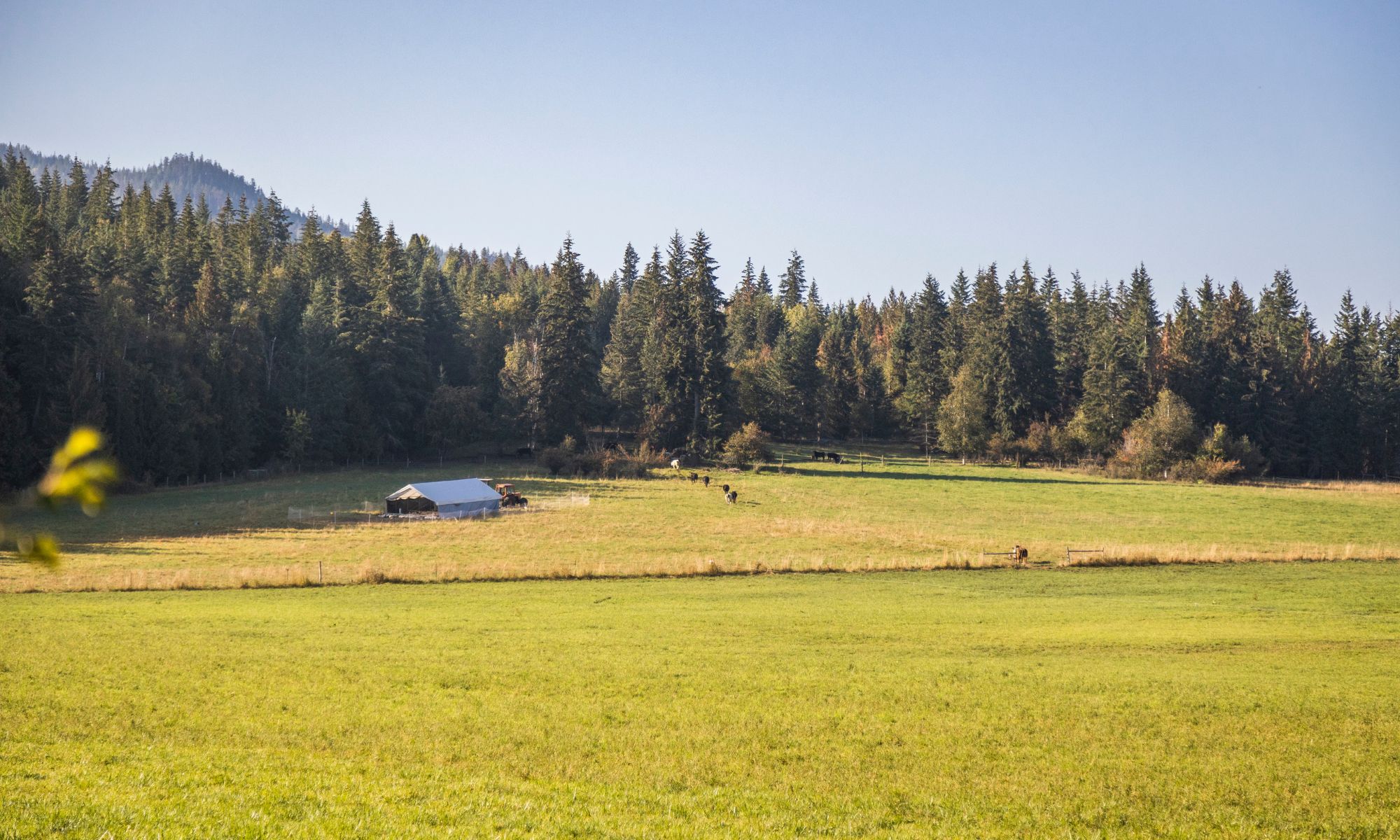
Regenerative agriculture is the framework that guides every decision we make on this land, from how our animals graze to how our food reaches your freezer.
At Fresh Valley Farms, regenerative agriculture means managing soil, plants, animals, water, energy, and people as one connected system. The goal is not simply to maintain what exists, but to improve it over time. Healthier soil. Stronger pastures. More resilient animals. A working farm that can feed families today and still function generations from now.
This approach directly shapes the beef, pork, chicken, eggs, and broths we produce. Regeneration is not a marketing term here. It is the operating system of the farm.

Animals as partners in regeneration
Regenerative agriculture goes beyond organic standards. It focuses on rebuilding ecological function rather than replacing it with synthetic inputs.
On our farm, this means prioritizing soil biology, pasture recovery, and nutrient cycling instead of short-term yield. Livestock are not treated as outputs alone, but as tools for land stewardship. Grazing plans, fencing layouts, stocking rates, and rest periods are chosen with long-term land health in mind.
These decisions happen on the ground, every day. They show up in how often animals move, how long fields rest, where water is placed, and how infrastructure supports flexibility rather than confinement.
Our animals are raised outdoors, where they can express natural behaviours and actively contribute to land health. Cattle build soil through grazing impact and manure distribution. Poultry add fertility and help manage insects. Pigs cycle nutrients and utilize food waste streams where appropriate. Each species has a role, and together they close nutrient loops that would otherwise require external inputs.
This whole-system approach is why we value the entire animal. In addition to fresh cuts, we sell sausages, organ meats, bones, and broths. Regeneration does not waste what the land and animals provide.

Soil as the foundation of our food system
Healthy soil is the starting point for everything we produce.
Soil is not inert dirt. It is a living system made up of bacteria, fungi, insects, plant roots, and organic matter. When soil biology is functioning well, it feeds plants naturally, improves water retention, and supports animal health without constant external inputs.
Our land is primarily permanent pasture, which allows roots to remain in place year-round. Managed grazing presses plant material into the soil surface, feeds microbial life through manure and urine, and stimulates root growth below ground. Over time, this increases organic matter, improves soil structure, and builds resilience against drought and heavy rainfall.
That soil health directly affects the nutrient density of the forage our animals eat, which in turn influences the flavour, texture, and nutrition of our grass-fed beef, pasture-raised poultry, and bone broths.

Managed grazing and pasture recovery
Livestock are central to regeneration when they are managed well.
We use rotational and adaptive grazing systems that mimic natural herd movement. Cattle are moved frequently, often daily or every few days, and do not return to the same area until plants have fully recovered. Long rest periods allow grasses and legumes to rebuild root reserves before being grazed again.
This approach prevents overgrazing, improves pasture density, and encourages deeper root systems. It also pulls carbon from the atmosphere and stores it in the soil as organic matter.
Poultry and pigs are integrated into this system in ways that complement grazing rather than disrupt it. The result is land that improves with use rather than degrading over time.

Pasture diversity and resilient food production
Diversity is a key part of resilience.
Our pastures contain a mix of grasses, legumes, and forbs rather than a single species. Each plant plays a role. Some fix nitrogen. Some build deep roots. Some remain productive in dry or cool conditions. Together, they stabilize forage production across seasons.
In addition to permanent pasture, portions of the farm are leased to our friend and farming partner Jordan Marr of Unearthed Organics, who grows heirloom dry beans and milling corn on selected fields. These crops are managed organically and contribute to crop diversity, soil cover, and regional food security.
Leasing land to trusted growers allows the farm to support multiple regenerative enterprises while keeping the land in agricultural production.

Pollinators and biodiversity in action
A regenerative farm supports more than livestock.
Our fields and field edges host honeybee hives managed by Wild Antho, a local beekeeping operation run by Emily and Shayne. Their hives are placed on the farm during the season, supporting pollination across pasture plants, gardens, and nearby crops.
In addition to managed pollinators, the farm includes forest edges, wetlands, riparian zones, and undisturbed areas that provide habitat for birds, insects, and wildlife. These zones help control pests naturally, support pollination, and serve as indicators of ecosystem health.
We participate in citizen science projects like iNaturalist that track species presence on the farm, using these observations to guide long-term land management decisions.

Infrastructure that supports regeneration
Regenerative agriculture requires infrastructure that supports flexibility, not confinement.
We use mobile fencing systems, low-energy water setups, and solar-powered components that allow animals to move easily across the landscape. This flexibility makes rotational grazing possible at scale.
Our poultry systems include a solar-powered robotic barn from UKKO Robotics (ROVABarn), which moves birds across pasture automatically while providing shelter, ventilation, and predator protection. This system reduces labour, improves bird welfare, and prevents pasture damage by distributing impact evenly.
We also operate a commercial EcoDrum in-vessel composter, which allows us to compost organic waste and mortalities safely and efficiently on site. This reduces hauling, improves biosecurity, and produces stable compost that can be returned to the land.
Our passive solar, geothermal greenhouse is designed to operate year-round in Canadian conditions, using passive solar gain and geothermal temperature moderation rather than fossil fuels. From a regenerative perspective, the greenhouse supports diversity and resilience. It extends the growing season, buffers against climate variability, and creates space for experimentation without putting pressure on field systems.

Energy, transport, and emissions
We evaluate energy use, transport, and infrastructure through a systems lens. Solar-powered fencing reduces fuel use. Efficient water systems minimize pumping. Our electric delivery vehicle lowers emissions in our direct-to-consumer distribution network. These choices reduce operating inputs and allow us to reinvest time and resources into land stewardship rather than extraction.

Water, climate resilience, and long-term farming
Healthy soils manage water better. Permanent ground cover and deep root systems allow rainfall to infiltrate rather than run off. This reduces erosion, protects waterways, and keeps nutrients where plants can access them.
As climate patterns become more unpredictable, this resilience matters. Regenerative management helps buffer drought, intense rainfall, and temperature swings, supporting consistent production of meat, eggs, and broth year after year.

Regeneration as a long-term commitment
Regeneration does not happen in a single season. Some years show rapid improvement. Others reveal limits and lessons. Each season informs the next. The work requires patience, monitoring, and a willingness to adapt.
We manage this farm with future farmers in mind. The goal is to leave land that is more fertile, more biologically active, and more resilient than when we started.

Why regenerative agriculture matters to us, and to you
We farm because we believe agriculture can heal.
Regenerative agriculture allows us to produce food while rebuilding soil, supporting wildlife, strengthening local partnerships, and keeping farming viable in the North Okanagan. It is why our beef, pork, chicken, eggs, broth, and meat boxes taste the way they do and why we are committed to transparency in how they are raised.
When you support Fresh Valley Farms, you support a food system built on regeneration rather than extraction. This work is ongoing. We are committed to continuing it, one pasture, one animal, and one plate at a time.