
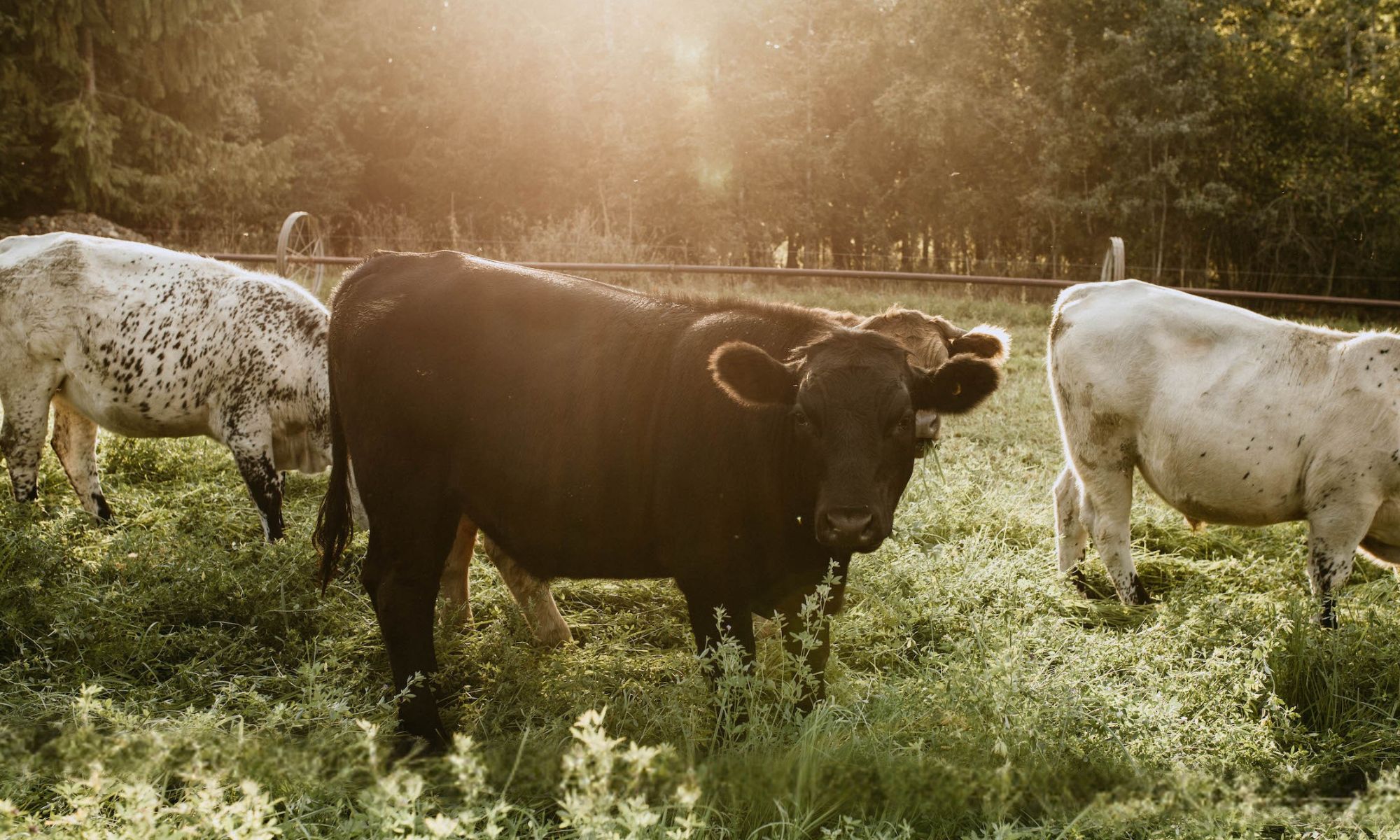
The difference between grass-fed and grain-fed beef starts long before the meat reaches your kitchen. It begins with how cattle are fed, how long they are raised, and how those choices shape flavour, nutrition, and texture.
Cattle diet
Grass-fed beef comes from cattle that eat grass and forage for their entire lives. When beef is both grass-fed and grass-finished, the animals stay on pasture right up to processing. Grain-fed beef usually comes from cattle that begin on pasture, then are finished on a grain-based diet such as corn or barley to promote faster weight gain and more marbling. This distinction matters because diet directly affects how fat forms in the meat and how the beef tastes when cooked (Healthline, 2023).
Nutrition comparison
From a nutrition standpoint, grass-fed beef is typically leaner. It usually contains less total fat and fewer calories per serving than grain-fed beef. Grass-fed beef also tends to contain higher levels of omega-3 fatty acids and conjugated linoleic acid, commonly called CLA. These fats are associated with anti-inflammatory effects, though research is ongoing. Grain-fed beef, by contrast, has more total fat and higher marbling, which increases calorie content but also contributes to tenderness and richness.
Micronutrients can differ as well. Grass-fed beef often contains slightly higher levels of vitamin E and beta-carotene, a precursor to vitamin A. These differences depend on pasture quality, season, breed, and overall farm management, so they are not identical across all grass-fed systems.
Flavour comparison
Taste is where many people notice the difference most clearly. Grain-fed beef is often described as buttery, mild, and rich. The higher fat content melts during cooking, which produces a softer texture and familiar steakhouse flavour. Grass-fed beef tends to taste cleaner and more distinctly beefy. Because it is leaner, the texture can feel firmer, especially if overcooked. Cooking grass-fed beef gently and avoiding high doneness levels helps preserve moisture and tenderness.
Animal Welfare
Animal management practices also differ. Grass-fed systems keep cattle on pasture for most or all of their lives, allowing them to graze and move naturally. Many consumers associate this with improved animal welfare.
Grain-fed systems often involve feedlots during the finishing stage, which increases efficiency and shortens the animal’s lifespan before processing. It is important to note that grass-fed and organic are separate certifications. Beef can be grass-fed without being organic, and organic beef can still be grain-fed if grain meets organic standards.
Environmental impact
Environmental impact is more complex than it first appears. Grass-fed systems can support soil health and pasture ecosystems when well managed, but grass-fed cattle usually take longer to reach market weight. Sustainability depends heavily on local conditions, grazing practices, and land use rather than feed type alone.
Leave a Reply