
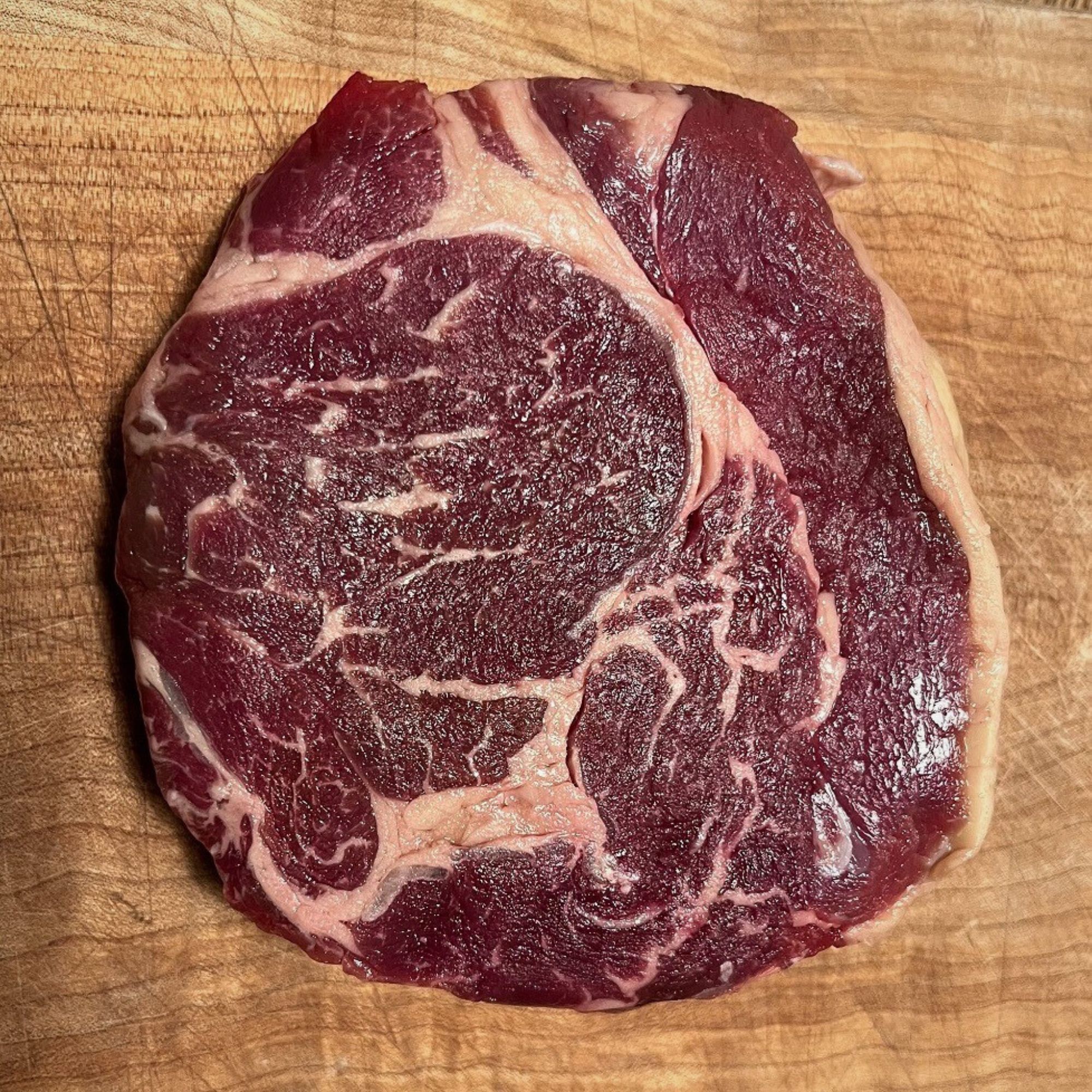
Cooking perfect steak in the kitchen starts in the oven, not on the stove.
Here is a clear, step-by-step way to cook a grass-fed steak in the oven so it turns out tender, juicy, and full of flavor every time.
Why grass-fed steak feels “tricky”
Grass-fed beef is usually leaner than grain-finished beef. That lean meat can feel chewy if it is cooked too hot or too fast.
Raised well though, grass-fed beef is amazing. When cattle eat diverse pasture and good forage, the meat has
- Rich beef flavor
- Firm but tender texture
- More omega-3s and a better fat profile than grain-fed beef
Grain-finished beef tends to be fattier, but the fat is different. Grass-fed beef usually has more omega-3s and more conjugated linoleic acid (CLA), while grain-fed beef has more omega-6s.
The secret: reverse sear in the oven
Grass-fed steak is less forgiving than grain-finished steak. There is less fat to hide mistakes. So we use a method that gives us control: the reverse sear.
Reverse sear means:
- Cook the steak low and slow in the oven first
- Bring it up gently to the exact inside temperature you want
- Rest it briefly
- Finish with a very quick, very hot sear in a pan for crust
Food scientist J. Kenji López-Alt helped popularize this method because it cooks the steak more evenly and keeps more juice inside.
The result:
- Pink from edge to edge
- Nice browned crust
- Less risk of going from “perfect” to “ruined” in 60 seconds
This works very well for grass-fed beef.
What you need
- Grass-fed steak, at least 1.5 inches thick – Ribeye, striploin, T-bone, sirloin, or picanha all work
- Salt
- Pepper
- Neutral cooking oil (for searing)
- Oven
- Heavy pan that can get very hot – Cast iron is ideal
- Instant-read meat thermometer
The thermometer is the one tool that matters most. Guessing the doneness is how steaks get overcooked.
Ideal temperatures for grass-fed steak
Use this as a guide for the internal temperature you want when the steak is finished.
- Rare: 120–125°F (49–52°C)
- Medium-rare: 130–135°F (54–57°C)
- Medium: 140–145°F (60–63°C)
Grass-fed steaks shine at rare or medium-rare.
With reverse sear, you will first cook to about 10–15°F below your target in the oven, then finish those last degrees during the hot sear.
Step-by-step: reverse-seared grass-fed steak in the oven
Season early
Pat the steak dry with a clean towel.
Salt it well on all sides. Add pepper if you like.
If you have time, put it on a wire rack over a baking sheet in the fridge, uncovered, for a few hours or overnight. This does two things:
- Salt moves into the meat and seasons it
- The surface dries out so it browns better later (López-Alt, 2018)
If you do not have time, just season it and leave it on the counter for 20–30 minutes while you set up.
Set up the oven
Heat the oven to 225–250°F (about 110–120°C).
Place the steak on a wire rack over a baking sheet. The rack helps air move around the steak so it cooks evenly.
Slow-cook the steak
Put the steak in the oven.
Insert your thermometer into the thickest part.
Cook until the steak is:
- 105°F (40°C) for rare
- 115°F (46°C) for medium-rare
- 125°F (52°C) for medium
This usually takes about 20–45 minutes, depending on steak thickness and your oven. Check the temperature, not the clock.
The steak will look dull and not very pretty at this stage. That is fine. You are building the inside first.
Rest while you heat the pan
Take the steak out of the oven. Set it on the counter.
Let it rest for 5–10 minutes while you get the pan ripping hot. This short rest lets the heat even out inside the meat.
Put your cast iron pan on the stove over high heat. Let it heat until a drop of water flicked in the pan sizzles and vanishes almost at once. Add a small splash of oil and swirl.
Sear for crust
Lay the steak in the hot pan. It should sizzle loudly.
Sear:
- About 30–45 seconds on the first side
- Flip and sear another 30–45 seconds
- Use tongs to hold it on its side to brown the fat edge if there is one
You are not “cooking” the steak now. You are just browning the outside. The inside is already at your target temperature or just under.
If you want, you can add a small spoon of butter at the end and spoon it over the steak for extra flavor.
Check and slice
Take the steak out of the pan. Check the temperature again in the thickest part. It should now be at your final target:
- Around 120–125°F (49–52°C) for rare
- Around 130–135°F (54–57°C) for medium-rare
With reverse sear, the crust is fresh and the center is already settled, so you do not need a long resting time. A couple of minutes is plenty.
Slice across the grain and serve.
Tips specific to grass-fed beef
Use a bit more fat
Because grass-fed beef is leaner, I like to
- Rub a small amount of oil on the steak before searing
- Add a spoon of butter or beef tallow to the pan at the end
That extra fat helps carry flavor and gives a better crust.
Do not cook it screaming hot the whole time
High heat from start to finish is what makes grass-fed steak tough.
The reverse sear keeps the “hot and fast” part very short. The oven does the gentle work first, then the pan just adds color.
Accept small differences between animals
Grass-fed beef changes from animal to animal and season to season.
Things that affect texture and flavor:
- What mix of grasses and plants the cattle were eating
- Weather (drought vs wet years)
- Age of the animal
You may notice that one sirloin is slightly firmer than another, or one ribeye has a deeper flavor. That is normal for real food. You can still cook them the same way.
Leave a Reply