
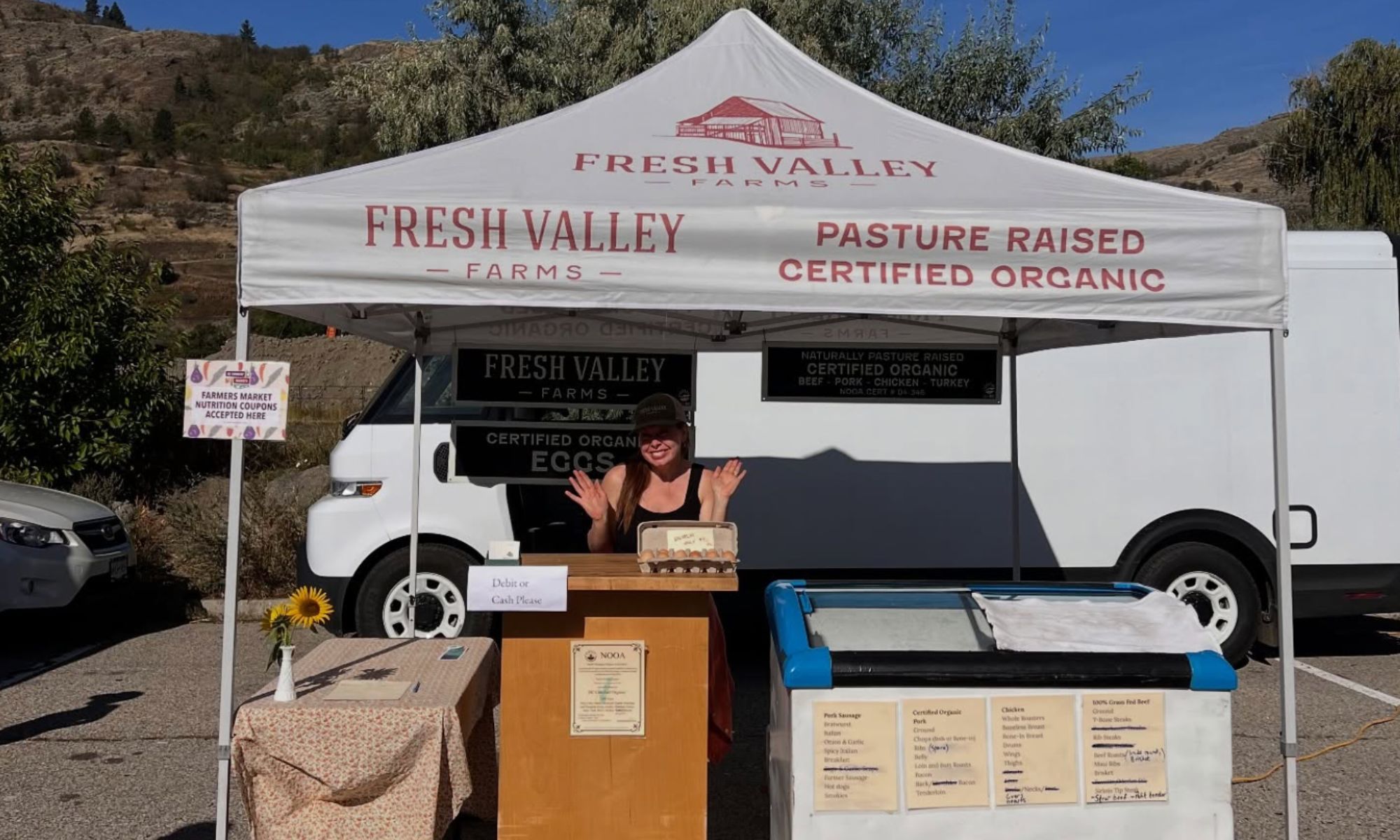
Food tastes different when you know where it comes from. Our direct-to-consumer meat sales allow Fresh Valley Farms to sell meat straight from our farm to the people who eat it.
This model removes unnecessary steps. No anonymous supply chains. No extra delivery trucks. No middle layers that disconnect farmers from customers. Just clear, direct relationships built on trust.

What direct-to-consumer means
Direct-to-consumer meat sales mean customers buy food straight from Fresh Valley Farms, without going through grocery chains, distributors, or anonymous supply networks. The relationship is direct, personal, and transparent.
Animals are raised on our certified organic farm using pasture-based, low-stress systems. Poultry is processed on farm at our licensed, inspected poultry abattoir. Beef, pork, and lamb are processed at nearby inspected facilities and returned directly to us. From there, meat goes straight to customers through scheduled pickup routes, pre-orders, bulk orders, and farm-gate sales. There are no extra warehouses, no long-distance distribution centres, and no unknown handoffs along the way.
This model allows every step to remain visible and intentional. We decide how animals are raised, when they are processed, how cuts are handled, and how food is packed and delivered. Customers know where their food comes from, how it was produced, and who to contact with questions. Accountability is built into the system.

Why we choose this model
We choose direct-to-consumer sales because it aligns with how we farm and what we value. It allows us to prioritize animal welfare, careful processing, and quality over speed or volume. We can plan harvests thoughtfully instead of responding to last-minute market pressure. We can use the whole animal, reduce waste, and offer a wider range of cuts than most retail systems allow.
Direct sales also keep more value on the farm and in the local economy. Instead of margins being absorbed by multiple middle layers, revenue supports the people doing the work: farmers, butchers, processors, and local delivery partners. That stability helps small farms stay viable and continue farming responsibly.
Most importantly, this model builds trust. Customers are not just buying meat. They are supporting a specific farm, a known set of practices, and a regional food system designed to last.

Transparency and trust
Direct sales make transparency part of everyday business, not a marketing claim. Customers can see how animals are raised, what they eat, and how the farm operates because the farm is visible and accessible. They know where the land is, who is caring for the animals, and how decisions are made.
Questions are expected and encouraged. Conversations happen at order pickup, by email, and on the farm itself. Feedback shapes how we operate and what we offer. That ongoing relationship builds real trust over time. It is earned through openness, consistency, and accountability, not through labels or packaging alone.

Animal welfare and processing
Selling directly allows us to plan each animal’s life from start to finish. Livestock are raised in low-stress systems, with daily handling and movement designed to keep animals calm and healthy. Transport distances are kept as short as possible, and processing is scheduled intentionally rather than rushed.
All of our poultry is processed on farm at our own licensed on-farm poultry abattoir, allowing birds to be harvested without transport stress. Our beef, pork, and lamb are processed locally through the North Okanagan Butcher Hub, run by our long-time butcher partner Matt. Keeping processing close to home reduces animal stress, improves meat quality, and maintains full traceability.

Supporting local food systems
Direct-to-consumer sales keep food, money, and decision-making close to home. When customers buy from Fresh Valley Farms, they are supporting a network of people and businesses across the North Okanagan and Shuswap who make local food possible from start to finish.
Home meat delivery in Vernon is handled by Nature Delivered, a regional business focused on connecting households with nearby farms year-round. Many of our pantry items come from partner farms who share our land and values, including raw honey from Wild Antho and heirloom beans and corn from Unearthed Organics, grown right here on our farm.
This kind of regional food system is more efficient and more resilient. Fewer food miles reduce emissions. Local processing and storage reduce bottlenecks. When global supply chains are disrupted, farms with direct relationships to customers can continue feeding their communities. Supporting local food systems is not just about freshness or flavour. It is about building a food economy that can adapt, endure, and keep people fed close to home.

Meat quality and nutrition
Pasture-based systems produce meat with distinct flavor and texture. Grass-fed beef reflects seasonal pasture. Slow growth supports muscle development. Fat composition differs from grain-fed systems.
Direct sales allow us to offer whole cuts, mixed boxes, and bulk options. Customers gain access to parts often missing from grocery cases. Better use of the whole animal reduces waste and honors the life raised.

Predictability for the farm
Direct sales help stabilize farm income. Pre-orders and bulk purchases allow better planning. Animals are raised with known demand. Waste is reduced. Cash flow is steadier.
That stability supports long-term investments in soil health, infrastructure, and stewardship. Good farming depends on good planning.

Education and connection
Direct sales turn food into a conversation. Customers learn about seasons, grazing, and how weather affects farming. They gain skills in cooking and storage. They reconnect with food as something real, not abstract. This connection builds appreciation for farming and respect for the land.

A different kind of value
Direct-to-consumer meat is not about cheap food. It is about honest food. Food raised with care. Food that reflects the true cost of good farming.
At Fresh Valley Farms, direct sales are not just a business choice. They are part of a larger commitment to transparency, stewardship, and building a food system that works for people and the land.