
Good farming is part observation, part hard work, and part smart tools. At Fresh Valley Farms, we use agri-tech to support regenerative grazing, reduce physical labour, and improve animal care without replacing the farmer’s eye or judgment. Every technology we use has to earn its place by making the land healthier, the animals calmer, and the system more resilient.

Solar-Powered Robotic Mobile Pasture Barn
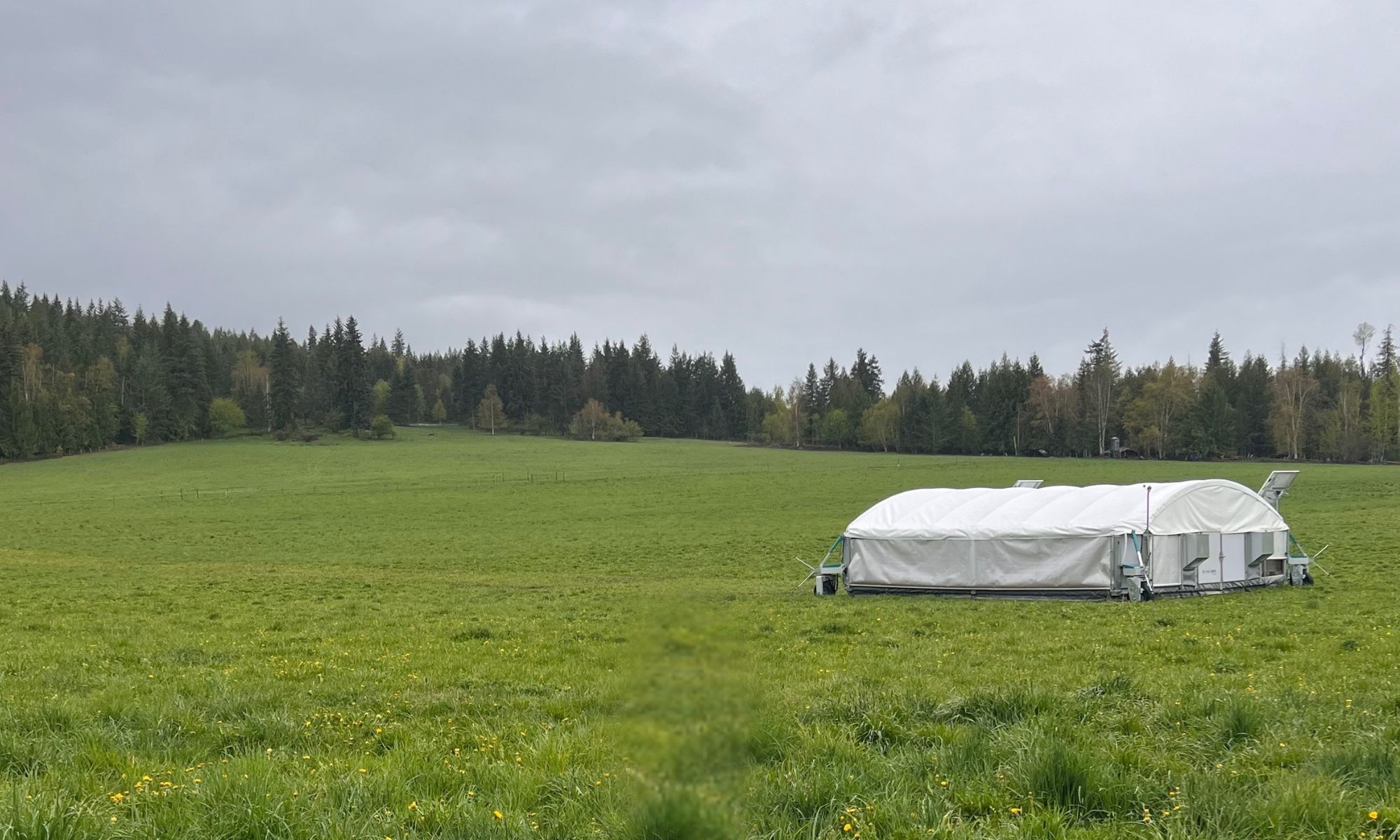
Fresh Valley Farms uses the ROVA|BARN from UKKÖ Robotics to raise poultry on pasture with precision and consistency. The ROVA|BARN is a fully autonomous, solar-powered pasture barn that moves daily, bringing fresh grass to the birds while spreading manure evenly across the field.

The barn integrates feed, water, ventilation, and predator protection into one mobile system. Built-in sensors and cameras provide live data on temperature, movement, and animal conditions through a mobile app. This allows us to monitor birds in real time without unnecessary handling or disturbance. The result is healthier animals, better pasture recovery, and a dramatic reduction in daily labour.

Portable electric fencing for rotational grazing
Our grazing system depends on fast, flexible fencing. We rely on Gallagher Animal Management portable electric fencing to create small, temporary paddocks that allow us to move animals frequently and protect regrowth.
Gallagher fencing systems are lightweight, durable, and designed for rapid setup and takedown. This lets us adapt grazing plans based on weather, forage growth, and animal needs. Frequent moves improve pasture utilization, reduce parasite pressure, and support soil health. Reliable voltage matters. When animals respect the fence every time, grazing stays calm and predictable.

We also use Gallagher’s animal movement and control tools, including their eShepherd technologies, to support low-stress handling and efficient pasture management. One of the biggest recent changes at Fresh Valley Farms is the introduction of eShepherd virtual fencing collars for cattle.
This technology allows us to create and adjust grazing boundaries without moving as much physical fencing by hand. The system is similar in concept to the invisible boundary systems some people use for dogs, but it is designed for pasture-based livestock management.
For us, that means more targeted grazing, more flexible paddock design, and better timing. Cattle can be guided onto fresh pasture more often, which supports a more diverse and nutritious diet while also helping protect plant species we do not want overgrazed.
Virtual fencing also gives us new options for weed control in areas with burdock, thistle, and other problem plants, reducing mowing and manual labour. It can also help us graze land that would otherwise be difficult to fence effectively, including steeper slopes, brushy ground, and areas near riparian corridors.
The technology comes from New Zealand, where it has been in use for several years. In BC, adoption is still limited, and Fresh Valley Farms is among only a handful of farms and ranches using it so far.

Solar-powered Systems
Fresh Valley Farms uses solar power to run key farm systems. Our solar panel array supplies renewable electricity for barns, fencing energizers, monitoring gear, and on-farm processing. It also helps power our EV delivery and farm fleet.

Solar cuts operating costs and emissions, and it keeps equipment running in remote pastures where grid power is not practical. We pair solar with low-draw tools like mobile barns and battery-based fencing so our systems stay steady through the seasons.

Data-informed grazing decisions
Technology helps us record and respond, not automate blindly. We use grazing plans, movement schedules, and pasture observations alongside digital tools to track animal performance, rest periods, and seasonal patterns. Data supports decision-making, but it never replaces walking the field.
Agri-tech allows us to adjust stocking density, rest periods, and movement timing with confidence. Small changes, made consistently, compound into healthier land over time.

Passive solar greenhouse
Our greenhouse is a four-season passive solar greenhouse designed for cold Canadian climates and powered by low-grade geothermal energy. It combines passive solar design, geothermal heat exchange, and active air circulation to maintain stable growing conditions year-round.
In winter, heat stored in the ground is moved through the structure to prevent freezing without fossil fuels. In summer, the same system helps regulate excess heat. Fans continuously circulate air, improving temperature consistency, plant health, and humidity control.
From an agri-tech perspective, this system demonstrates how low-energy infrastructure can replace high-input solutions. Instead of relying on propane, electric heaters, or seasonal shutdowns, the greenhouse uses physics, earth heat, and smart airflow to extend the growing season to all twelve months.

On our farm, the greenhouse functions as both a working demonstration space and a production support tool. Each spring, it is where we start seedlings for gardens and farm plantings. Any crops we grow for commercial sale begin here, under controlled conditions, before transitioning outdoors. This reduces crop loss, improves timing, and supports more efficient use of land and labor.
The Greenhouse in the Snow system installed at Fresh Valley Farms was purchased through a local Armstrong-based dealer and is built in Canada using galvanized steel framing engineered for snow load, wind, and temperature extremes. It is designed to operate continuously, even in conditions as cold as –40°C.
This greenhouse fits directly into our broader agri-tech approach: technology that supports biological systems rather than replacing them. It allows us to grow food when fields are frozen, shorten the gap between seasons, and experiment with crops that would otherwise be impossible in our region.

Precision composting
Fresh Valley Farms uses a commercial, in-vessel composting system from EcoDrum as part of our agri-tech approach to nutrient management and biosecurity. This is not backyard composting. It is engineered infrastructure designed for production farms and inspected food systems.
The EcoDrum system allows us to manage organic by-products from poultry processing, egg handling, and daily farm operations directly on site. Material is processed inside a sealed, rotating vessel where airflow, temperature, and mixing are tightly controlled. This creates the conditions needed for rapid, low-odor composting while using time and heat to reduce pathogens. The enclosed design improves biosecurity, limits pest access, and prevents runoff into soil and waterways.
From a technology standpoint, the system is built for consistency. It operates year-round, including through cold Okanagan winters, with low energy requirements and automated controls. This reliability matters on a working farm. Composting does not pause when temperatures drop, and waste does not need to be hauled long distances for disposal. Fewer truck trips reduce emissions and keep nutrients closer to where they are produced.
The finished compost is a stable, high-quality soil amendment that can be returned to the land. This closes an important nutrient loop. Organic material stays within the farm system and contributes to long-term soil health rather than becoming an external waste stream. In regenerative agriculture, these closed loops are as important as grazing plans or crop rotations.
This composter is a good example of how agri-tech supports regenerative farming. It is quiet, practical, and largely invisible to customers, but it underpins animal welfare, environmental protection, and operational resilience. Thoughtful technology like this allows the farm to scale responsibly while staying aligned with ecological and community values.
Why agri-tech matters at Fresh Valley Farms
We adopt technology only when it supports our values. At Fresh Valley Farms, agri-tech exists to:
- Reduce physical strain and repetitive labour
- Improve animal welfare and observation
- Support regenerative grazing systems
- Lower energy use and emissions
- Increase consistency without sacrificing care
Used well, agri-tech does not distance farmers from their animals or land. It creates space to pay closer attention, make better decisions, and build systems that can last for generations.
This is not farming replaced by machines. It is farming supported by the right tools, used with intention.